TikTok loses 60% of your data.
TikTok traffic is almost all mobile, and that's where the most signal gets lost. We send it through Events API.


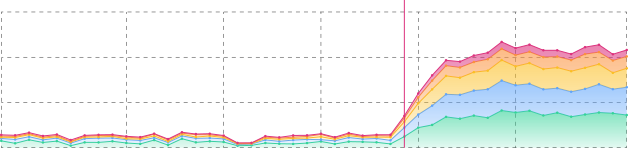


TikTok receives 40% of the data from each event
The classic pixel reads the buyer's data inside the browser. If the browser doesn't allow it, the event arrives almost empty. These are the four biggest leaks.
Ad blockers
Between 25% and 40% of users have one turned on. They don't block ads: they block the scripts that send the data.
iOS and cross-app tracking
If your customer buys from Instagram's in-app browser on an iPhone and didn't give permission, most identity parameters never get sent.
Cookies that delete themselves
Safari deletes them after 7 days. The click ID is lost and the purchase gets disconnected from the ad that drove it.
Accelerated checkouts
One-click payments skip the steps where the pixel used to read the buyer's data. Less friction for the customer, less information for you.
Real journey
TikTok, Meta and TikTok claim the same purchase. We see every buyer's whole journey and tell you which channel actually brought it.









Features
- Journey to purchase
- Top paths
- Where they drop
- Channel overlap
We recover the data.
TikTok does the rest.
- Step 1
We capture the data the browser can't send
The Escalafy Pixel doesn't live in your customer's browser: it processes every event server-side. A blocker can kill a script; it can't get between two servers. And for the test it runs in parallel with the pixel you already have, so you don't turn anything off to try it. - Step 2
And we send it complete, through the front door
Meta's Conversions API, Google's Enhanced Conversions, TikTok's Events API and the Klaviyo integration. With identity parameters enriched, deduplicated and free of bots — that's how your EMQ goes up and the algorithm actually learns who your buyer is. - Step 3
And the algorithm starts finding buyers, not clicks
With complete data, the platform understands who actually buys from you. It shows your ads to those people, stops spending on the ones who don't buy and builds lookalike audiences from real buyers. Same budget, more sales: your CPA goes down and your ROAS goes up. And when you raise your budget, returns stop falling.
Frequently asked questions
Instead of your customer's browser telling TikTok a purchase happened, the signal goes out from the server. A browser can be blocked; a server can't. That's why the events that used to get lost now arrive.
The native integration sends the event, but it sends very little about the person who bought. That's why we start by running our pixel in parallel with yours, without turning anything off and with events deduplicated, so TikTok never counts the same purchase twice. For a few days you compare, with real data, how many events each one captures and what EMQ each one gets. If ours doesn't add anything, you haven't changed a thing. When the numbers show it does, we remove the old one and ours runs alone — that's the step that lets the account fully optimize.
It depends on your traffic and your audience: stores with lots of mobile traffic and a young audience see a bigger gap, because there are more blockers and more iOS. At Smud, one of the largest e-commerce brands in Argentina, we ran both pixels in parallel and ours captured between 20% and 30% more events — across all of them: product views, carts, checkouts and purchases. The way to find your number is exactly that: run both for a few days and compare.
EMQ (Event Match Quality) is TikTok's score from 1 to 10. It measures how much useful information you send with each conversion. The higher it is, the better the algorithm can find people like your buyers — and the cheaper your acquisition gets.
No. You connect your store and your ad accounts in Escalafy and the pixel goes live in about five minutes, with no code and no tag containers to set up.
To Meta through the Conversions API, to Google Ads through Enhanced Conversions, to TikTok through the Events API and to Klaviyo through its native integration. All from the same connection and with the same deduplicated event, so every platform sees exactly the same thing and they stop each taking credit for the same sale on their own.
Many send back more events, but with the same empty parameters: EMQ doesn't move. We enrich every event with identity data, deduplicate it and filter out bots, which is what makes the algorithm actually learn and your CPA drop. On top of that, we tell you which of those events left you real profit, because we already know your product cost, shipping, fees, installments and discounts. All built for LATAM, at local prices and with no annual contract.
14 days free, with a money-back guarantee if it doesn't work for you afterward. That's enough time to take your baseline measurement, turn it on in parallel with the one you already have and watch EMQ and cost per sale move before you decide anything.
Events start arriving on day one. EMQ moves between day 2 and day 4, and the gap with TikTok visibly narrows in the first week. The effect on CPA shows up once the algorithm has optimized on the new data, between the second and fourth week — and that's when what matters most appears: being able to raise your budget without your ROAS dropping.
Stop operating on incomplete data.
Connect your stores, your payouts and your ads in 5 minutes and see today's real profit — not the one you find at month end.